
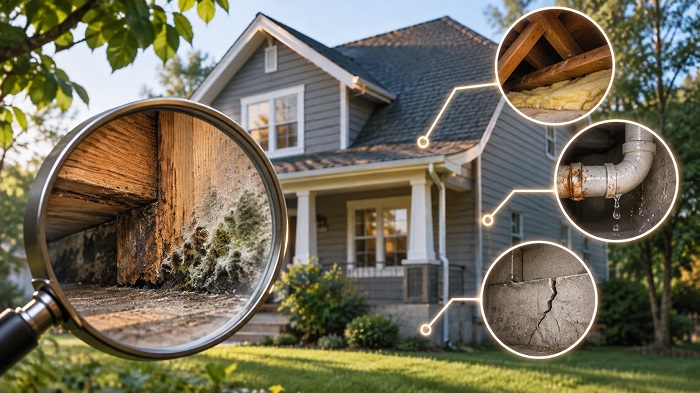
A standard home inspection is a valuable first step for any buyer, but it has limits. General inspectors look at the roof, electrical panel, plumbing fixtures and structure, and they mostly do it visually. Environmental specialists at Safe Site Env are often called to homes that already passed a general inspection, and they still find issues nobody could see from the surface. Below are the most common ones, and why they matter before you sign.
Why a General Inspection Misses Some Problems?
A home inspector covers a lot of ground. In two or three hours they assess dozens of systems, and their standards of practice usually exclude environmental hazards such as mold, asbestos and lead. They don’t open walls or send samples to a lab. That isn’t a flaw in their work; it’s a different scope. Problems inside wall cavities, ductwork or old building materials call for different tools: moisture meters, thermal imaging cameras and laboratory analysis.
The 5 Most Common Hidden Findings
These are the issues that come up again and again after a home has already “passed”:
- Moisture behind shower walls. A slow leak from cracked grout or a worn valve can soak drywall for months while the tile looks perfect. Thermal cameras often reveal the damp pattern long before a stain appears.
- Mold inside the HVAC system. Condensation in air handlers and ducts keeps surfaces wet. Growth there can send spores into every room each time the system runs.
- Asbestos in older materials. Homes built before 1980 may have asbestos in popcorn ceilings, vinyl floor tiles, mastic adhesive or pipe insulation. You can’t identify it by eye; only lab testing confirms it.
- Lead-based paint under newer coats. In homes built before 1978, fresh paint can hide older lead layers that become hazardous during sanding or renovation.
- Old water damage with a cosmetic fix. A patched ceiling or new paint over a past leak can conceal materials that never fully dried.
What These Findings Mean for Buyers?
Hidden issues affect more than health. They change the price, the renovation budget and sometimes the insurance picture. A documented moisture problem or confirmed asbestos in the flooring gives a buyer grounds to renegotiate, ask for repairs or request a credit at closing. Without that data, the cost becomes the new owner’s surprise. Buyers planning a remodel should pay extra attention: disturbing asbestos or lead paint without testing first puts workers and family members at risk.
When to Add an Environmental Inspection?
Not every purchase needs one, but some signs make it worth the extra step. A musty odor, a home that sat vacant for months, a history of plumbing repairs, a crawl space or basement, or an older build date are all good reasons. The same goes for households with asthma or allergies. Schedule it during the contingency period so the results arrive while you still have options.
How to Get the Most Out of the Results?
Ask for a written report with photos, moisture readings and lab results, not just a verbal summary. Share it with your agent and, if needed, with a remediation contractor for a quote. Choose an inspector who doesn’t also sell remediation, so the findings aren’t shaped by a future sales opportunity. A clear report turns a vague worry into a specific decision.